
Solar for apartments, condos and small spaces
Balcony solar: generate your own power without a rooftop system.
Apartment? Condo? Renting? Balcony solar may let you generate a portion of your own electricity with one or two compact solar panels, without installing a traditional rooftop system. Get a simple production estimate without giving us your name, phone number, or email.
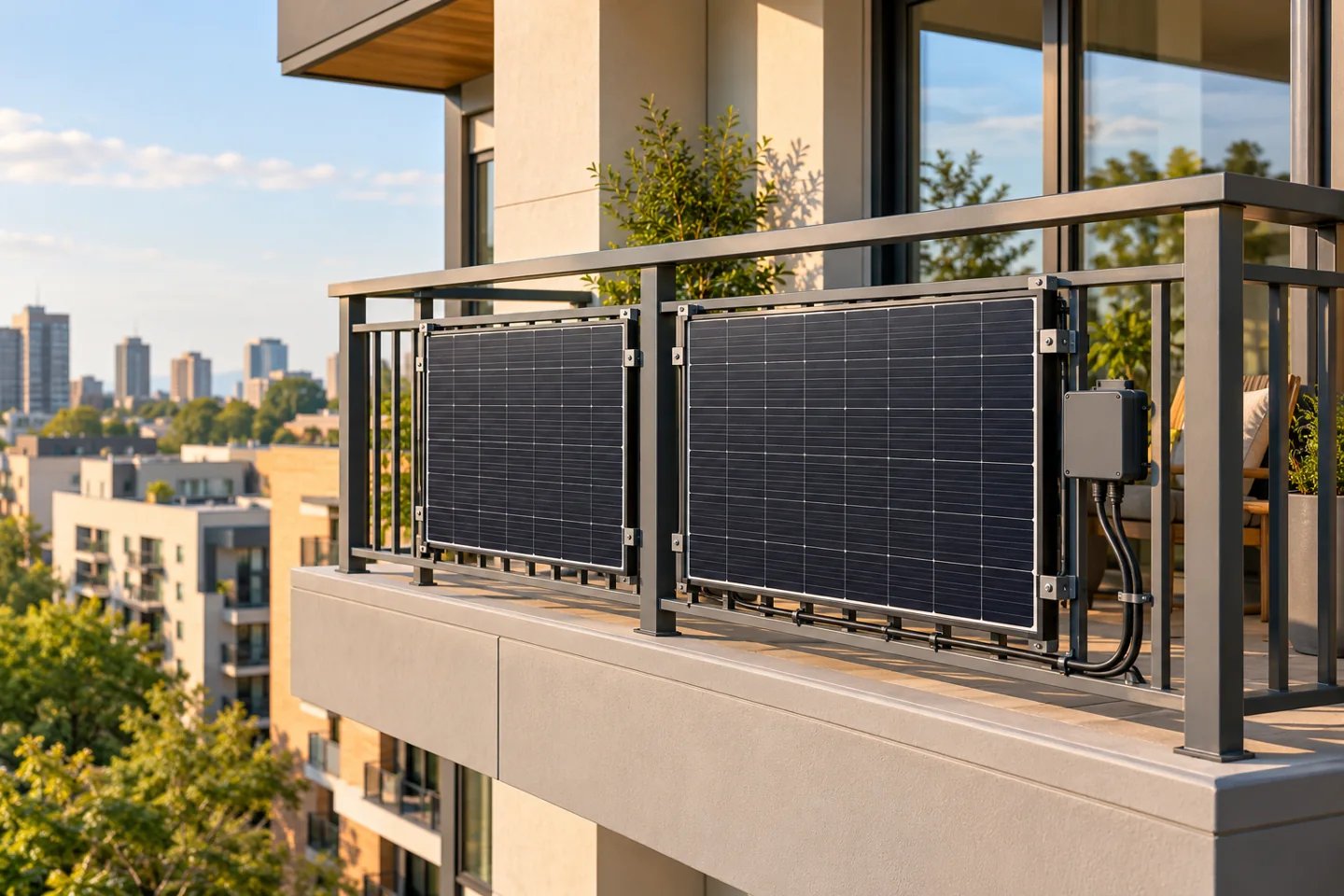
Sunlight reaches the panels
Compact panels produce direct-current electricity during daylight.
The microinverter converts it
A compatible microinverter changes that power into electricity the home can use.
Your daytime loads use it
Refrigerators, routers, computers, televisions and fans can use some of that power, reducing grid purchases.
Quick production estimate
What could fit on your balcony?
Choose a simple setup. This provides an educational range, not an engineering design or savings guarantee.
Illustrative system800 W
780 to 1,050 kWh/yearAbout 2.1 to 2.9 kWh on an average day
Enough to offset part of your daytime household use. Actual output may differ substantially.
Who balcony solar may help
It can be useful for renters, condo residents, apartment dwellers, and homeowners whose roof is shaded, unsuitable, or outside their control. The panels need safe outdoor space with useful sunlight.
What it can realistically power
The electricity is generally used by whatever your home is already running during sunny hours, such as a refrigerator, internet equipment, electronics, fans, or a home office. It reduces part of your grid use rather than powering one dedicated appliance.
What it will not do
A small balcony system normally will not eliminate an electric bill, run an entire home, or provide backup power during an outage. Output changes with panel size, direction, shade, weather, and season.
Simple equipment, serious safety
A typical system includes panels, secure mounting, a compatible microinverter, protection equipment, and a permitted connection method. Look for recognized certification, anti-islanding protection, weather-rated parts, secure wind-resistant mounting, and clear instructions.
Check permission before connecting
Rules are changing, but plug-in solar is not automatically legal everywhere. Confirm state law, utility requirements, electrical code, landlord or condo approval, fire rules, mounting restrictions, and insurance questions for the exact address.
Five checks before moving forward
Confirm useful sunlight. Confirm permission. Confirm the complete system's certification. Confirm safe mounting and cable routing. Confirm who is responsible if equipment or property is damaged. If any answer is unclear, stop and verify it before installation.
Primary sources
Virginia Code: Small Portable Solar Generation DevicesUtah Legislature: Post-Enactment Review of HB 340California Assembly Analysis of SB 868Optional human review
Ask Tower Solar to review your question
This form submits directly to Tower Solar. Nothing opens in your email app, and no information is sent until you choose Submit.
Questions to answer before moving forward
Can I plug a solar panel into any outlet?
No. Only a complete system specifically designed and legally permitted for plug-in operation should be considered. State rules, utility treatment, circuit requirements, and product certification must be verified first.
Will balcony solar eliminate my electric bill?
Usually not. These are small systems intended to offset a portion of electricity use, especially during sunny daytime hours.
Can renters use balcony solar?
Potentially, but they may still need landlord approval and must follow building, lease, mounting, electrical, fire, and state requirements.
Does Tower Solar recommend a specific product?
No. This section provides general education and safety guidance. Tower Solar does not currently endorse or sell a specific balcony solar product.
Get the numbers before the sales call.
Run a free preliminary estimate without entering your name, phone number, or email. Contact Tower only if you decide you want help.
Run my private estimate